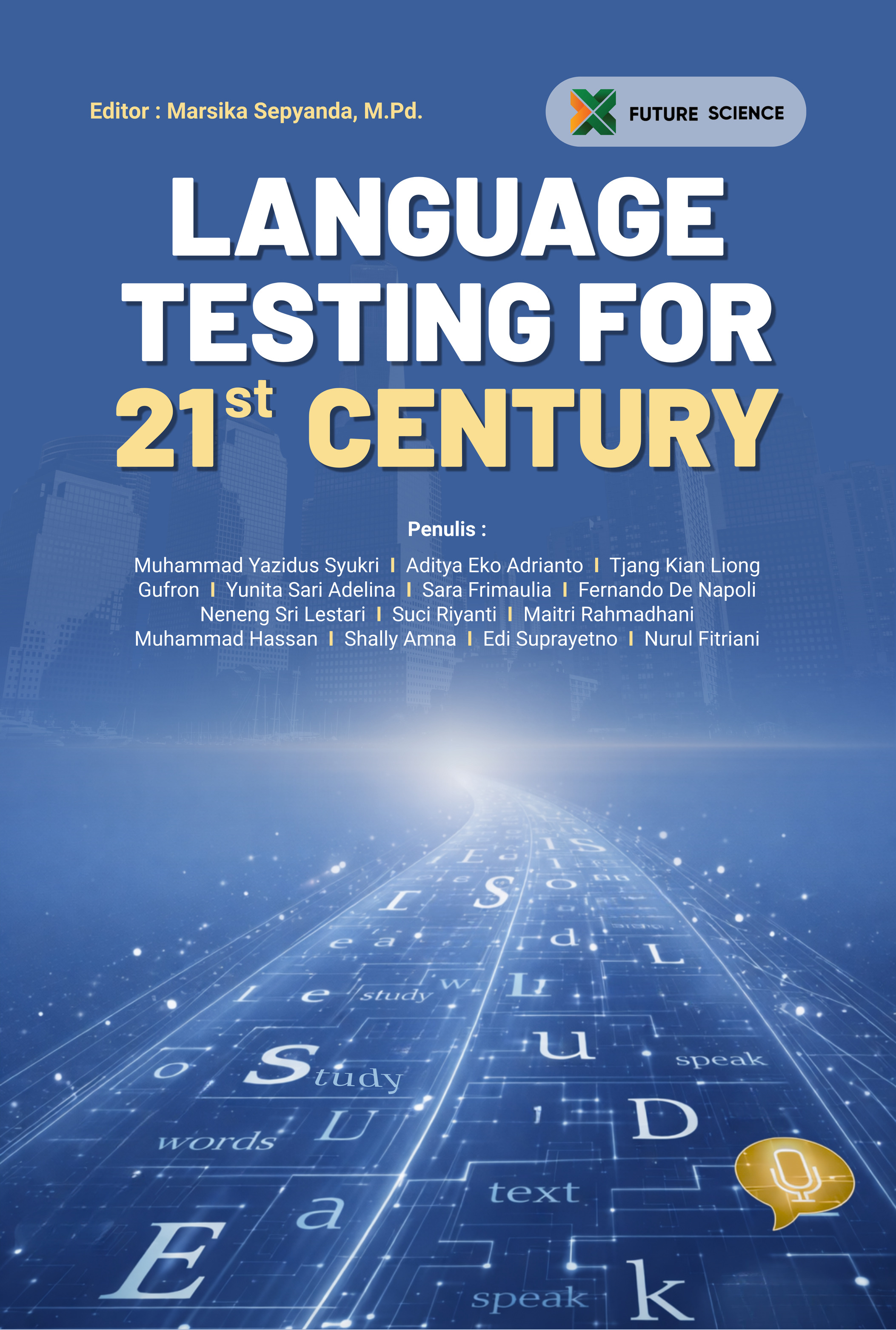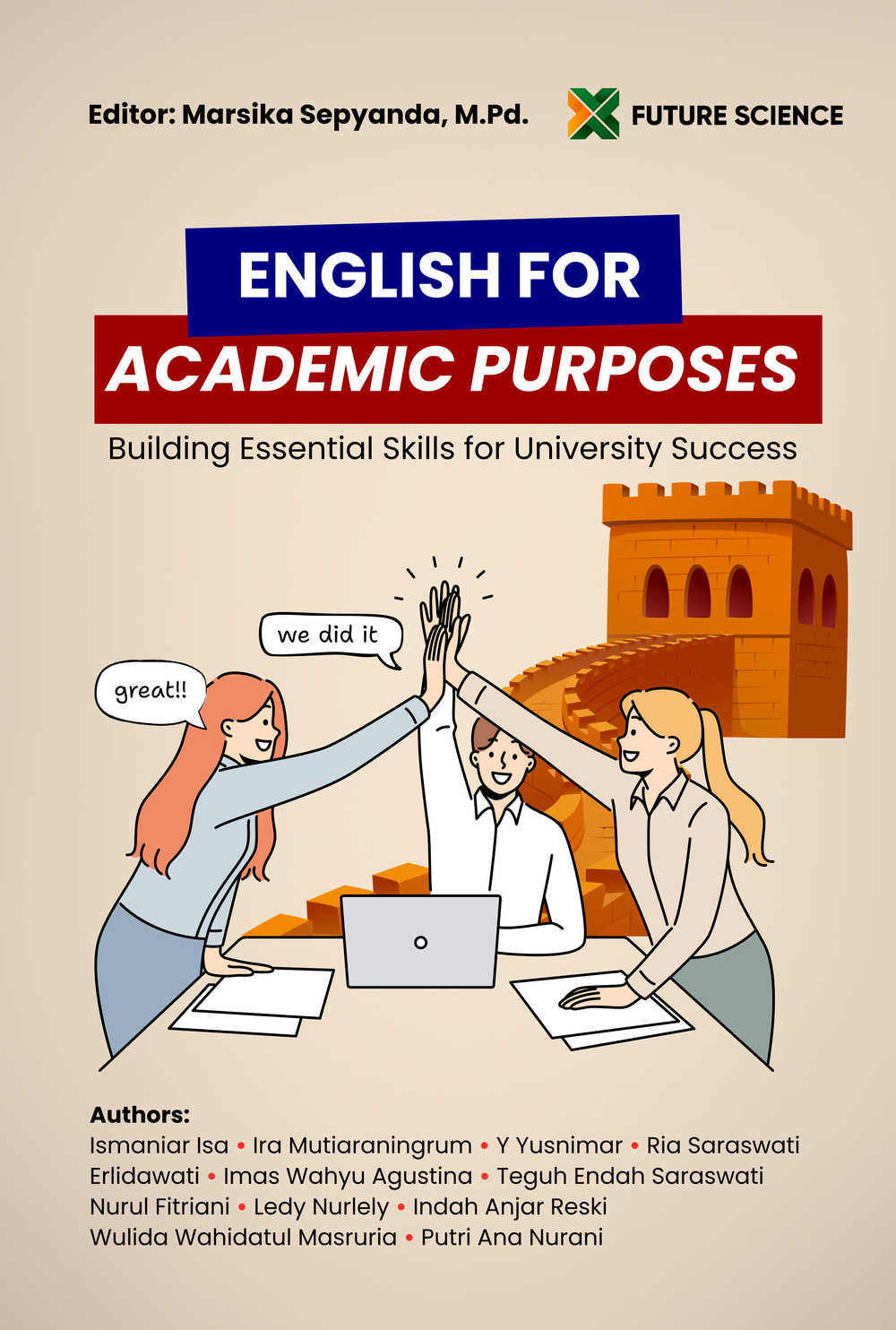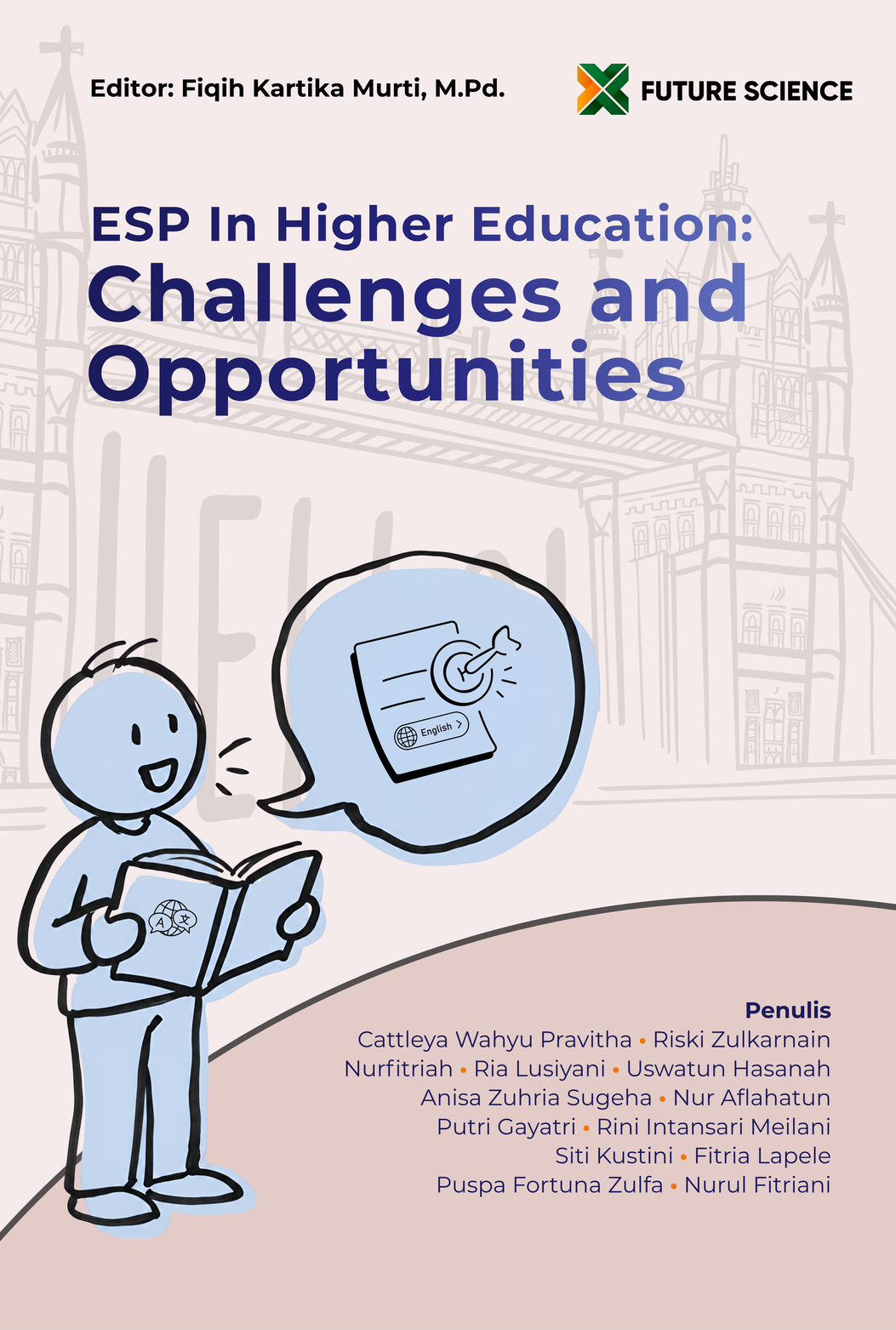
English for Specific Purposes (ESP) has become increasingly important in higher education due to the growing demand for English proficiency in academic and professional settings. Unlike General English, ESP is designed to meet learners’ specific linguistic needs related to their fields of study and future careers, helping them communicate effectively in specialized contexts. As universities aim to prepare students for participation in the global community, ESP plays a significant role in improving academic achievement, employability, and lifelong learning skills. The chapter “ESP in Higher Education: Challenges and Opportunities” provides an overview of the key concepts and practices of ESP. It discusses topics such as the nature of ESP, needs analysis, learner characteristics, linguistic challenges, affective factors, instructional materials, teaching methods, assessment and evaluation, and the use of technology in language learning. The chapter also highlights the importance of collaboration between language teachers and subject specialists to create meaningful and relevant learning experiences that match students’ disciplinary contexts. In addition to presenting the benefits of ESP, the chapter addresses common challenges faced by institutions, teachers, and students, including curriculum limitations, limited resources, diverse learner needs, and changing professional demands. Overall, it serves as a practical guide for improving the quality and effectiveness of ESP programs in higher education.
Kami memiliki banyak produk terkait yang bisa anda pilih.